Swing Vehicle Solutions: Advanced Material Handling Equipment for Maximum Efficiency

Get a Free Quote

Our representative will contact you soon.
Email
Name
Company Name
Message
0/1000

swing vehicle

A swing vehicle represents a revolutionary advancement in material handling technology, designed to optimize transportation efficiency in industrial and commercial environments. This innovative machinery combines the functionality of traditional forklifts with enhanced maneuverability capabilities, allowing operators to navigate through confined spaces while maintaining superior load stability. The swing vehicle incorporates a unique rotating mechanism that enables the entire lifting assembly to pivot independently of the chassis, providing unprecedented flexibility in warehouse operations. Modern swing vehicle designs integrate advanced hydraulic systems that deliver precise control over lifting, lowering, and rotation functions. The primary components include a robust chassis equipped with multi-directional wheels, a sophisticated hydraulic power unit, and an intelligent control system that coordinates all mechanical movements. These vehicles typically feature load capacities ranging from 2,000 to 15,000 pounds, making them suitable for diverse industrial applications. The swing vehicle technology employs state-of-the-art sensors and computerized controls to ensure optimal performance while minimizing operator fatigue. Safety features encompass automatic load sensing, stability monitoring systems, and emergency stop mechanisms that activate when detecting potential hazards. The ergonomic operator cabin provides excellent visibility and intuitive controls that reduce training time for new personnel. Battery-powered swing vehicle models offer environmentally friendly operation with reduced noise levels, making them ideal for indoor applications where air quality and sound pollution are concerns. The charging systems utilize fast-charging technology that minimizes downtime and maximizes productivity. Additionally, swing vehicle maintenance requirements are streamlined through diagnostic systems that monitor component wear and schedule preventive maintenance automatically. These vehicles demonstrate exceptional performance in narrow aisle warehouses, loading docks, and manufacturing facilities where space constraints limit traditional equipment effectiveness.

New Products

The swing vehicle delivers remarkable operational benefits that transform material handling processes across various industries. Primary advantages include exceptional maneuverability in tight spaces, allowing operators to navigate aisles as narrow as eight feet while maintaining full lifting capacity. This space efficiency translates directly into increased storage density and improved warehouse utilization rates. The rotating mechanism eliminates the need for complex positioning maneuvers, reducing cycle times by up to thirty percent compared to conventional forklifts. Productivity gains become evident through faster load placement and retrieval operations, enabling facilities to process higher volumes with existing workforce levels. The swing vehicle design minimizes product damage through precise positioning capabilities and gentle handling characteristics. Operators experience reduced physical strain due to ergonomic controls and automated assistance features that handle complex movements. Safety improvements include enhanced visibility from the operator compartment and advanced stability systems that prevent tip-overs during operation. The swing vehicle requires less floor space for maneuvering, creating opportunities for expanded inventory storage or improved traffic flow patterns. Energy efficiency advantages stem from optimized hydraulic systems and regenerative braking technology that extends battery life significantly. Maintenance costs decrease through simplified mechanical designs and predictive maintenance systems that prevent unexpected breakdowns. Training requirements are minimized due to intuitive controls and comprehensive safety systems that assist novice operators. The swing vehicle adapts to various load types including pallets, containers, and irregularly shaped items through adjustable lifting attachments. Environmental benefits include zero emissions operation, reduced noise pollution, and recyclable battery systems that support sustainability initiatives. Cost savings accumulate through improved efficiency, reduced labor requirements, and decreased facility maintenance needs. The swing vehicle investment typically recovers costs within eighteen months through operational improvements and reduced overhead expenses. Flexibility advantages allow single vehicles to replace multiple specialized pieces of equipment, simplifying fleet management and reducing capital expenditures.

Tips And Tricks

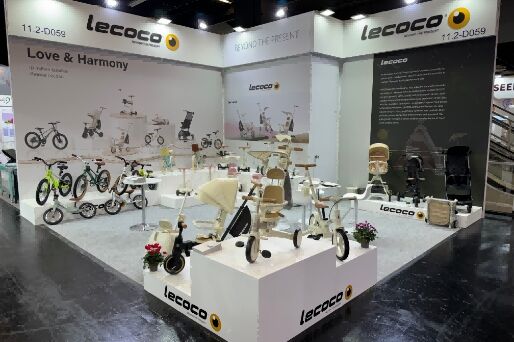
LECOCO Presents at Kind + Jugend 2024 in Cologne

08

Jan

LECOCO Presents at Kind + Jugend 2024 in Cologne

View More
LECOCO Presents at CBME 2025 in Shanghai

08

Jan

LECOCO Presents at CBME 2025 in Shanghai

View More
LECOCO Engages with Market at 24th CBME, Garnering Positive Response

08

Jan

LECOCO Engages with Market at 24th CBME, Garnering Positive Response

View More

Get a Free Quote

Our representative will contact you soon.
Email
Name
Company Name
Message
0/1000

swing vehicle

Advanced Rotating Mechanism Technology

Advanced Rotating Mechanism Technology

The swing vehicle revolutionary rotating mechanism represents the pinnacle of material handling innovation, setting new standards for operational flexibility and precision. This sophisticated system allows the entire lifting assembly to rotate a full 360 degrees independently of the vehicle chassis, creating unprecedented maneuverability in confined spaces. The rotation capability eliminates traditional positioning limitations that plague conventional forklifts, enabling operators to place loads with millimeter precision regardless of approach angle. Engineering excellence defines every aspect of the rotating mechanism, incorporating heavy-duty bearings, precision gears, and advanced hydraulic motors that deliver smooth, controlled movement under full load conditions. The system operates through computerized controls that monitor rotation speed, position accuracy, and load stability throughout the entire movement cycle. Safety interlocks prevent rotation when conditions could compromise stability, while sensors continuously monitor load distribution and center of gravity changes. The swing vehicle rotating mechanism reduces operator workload significantly by automating complex positioning tasks that typically require multiple maneuvers with standard equipment. This automation translates into faster cycle times, reduced operator fatigue, and improved productivity metrics across all material handling operations. Maintenance requirements for the rotating system remain minimal due to sealed bearing assemblies and self-lubricating components that extend service intervals. The precision engineering ensures consistent performance over millions of operational cycles, providing reliable service in demanding industrial environments. Additionally, the rotating mechanism integrates seamlessly with various attachment options, including specialized clamps, rotators, and custom handling fixtures that expand swing vehicle versatility. The technology proves particularly valuable in applications requiring precise load placement, such as narrow aisle warehousing, manufacturing line supply, and specialized storage systems where traditional equipment cannot operate effectively.

Enhanced Safety and Stability Systems

Enhanced Safety and Stability Systems

The swing vehicle incorporates comprehensive safety and stability systems that establish new benchmarks for operator protection and load security in material handling operations. These integrated systems work continuously to monitor vehicle stability, load conditions, and environmental factors that could affect safe operation. Advanced sensors throughout the swing vehicle chassis and lifting assembly provide real-time data to computerized control systems that make instantaneous adjustments to maintain optimal stability. The load moment indicator prevents overloading by calculating actual load weight against lifting height and extension distances, automatically limiting operations when approaching stability thresholds. Stability monitoring systems track center of gravity changes during lifting and rotation operations, providing audible and visual warnings when conditions approach safety limits. The swing vehicle features automatic leveling systems that compensate for uneven floor surfaces and maintain load stability during travel and lifting operations. Emergency stop systems activate immediately when detecting potential hazard conditions, bringing all vehicle functions to a controlled stop within predetermined safety parameters. Operator protection includes reinforced cabin structures, safety glass, and ergonomic seating systems that minimize injury risk during normal operations and potential accidents. The swing vehicle stability systems integrate with facility management software to provide detailed operational data and safety metrics for continuous improvement programs. Backup systems ensure continued safe operation even when primary sensors experience malfunctions, maintaining protection through redundant monitoring and control pathways. Training simulators help operators understand safety system functions and proper response procedures for various operational scenarios. Regular safety system diagnostics verify proper function and identify potential maintenance needs before they compromise operational safety. The comprehensive safety approach reduces accident rates, lowers insurance costs, and creates confidence among operators and facility managers regarding swing vehicle deployment in critical material handling applications.
Superior Space Optimization and Efficiency

Superior Space Optimization and Efficiency

The swing vehicle delivers exceptional space optimization capabilities that revolutionize warehouse design and operational efficiency through innovative engineering and intelligent control systems. Traditional material handling equipment requires significant maneuvering space for positioning and load placement, while the swing vehicle operates effectively in aisles as narrow as eight feet without compromising lifting capacity or operational speed. This space efficiency allows facilities to increase storage density by up to twenty-five percent while maintaining full accessibility to all inventory locations. The compact design enables swing vehicle operation in areas previously inaccessible to conventional equipment, opening new possibilities for facility layout optimization and inventory management strategies. Vertical space utilization improves dramatically through the swing vehicle ability to access high storage locations without requiring wide aisles for positioning maneuvers. The efficient operation reduces travel distances and cycle times, enabling facilities to process significantly more transactions with existing equipment fleets. Energy consumption decreases through optimized travel patterns and reduced idle time, contributing to lower operational costs and improved environmental sustainability. The swing vehicle design minimizes floor space requirements for charging stations and maintenance areas, freeing valuable facility space for productive use. Inventory management becomes more precise through improved access to storage locations and reduced handling damage from complex positioning maneuvers. The efficiency gains translate directly into cost savings through reduced labor requirements, decreased facility rental costs, and improved customer service levels. Facility planning benefits from swing vehicle flexibility, allowing designers to maximize storage capacity while maintaining efficient traffic flow patterns. The space optimization capabilities prove particularly valuable in urban warehouses where real estate costs are premium and every square foot directly impacts profitability. Additionally, swing vehicle efficiency reduces the total equipment fleet size required for specific operational volumes, lowering capital investments and ongoing maintenance expenses while simplifying fleet management requirements.

Get a Free Quote

Our representative will contact you soon.
Email
Name
Company Name
Message
0/1000