
 EN
EN




For B2B buyers sourcing children's mobility products, understanding how convertible bikes meet global safety standards is essential for ensuring product compliance, minimizing liability, and building trust with retail partners and end consumers. Convertible bikes, designed to transform from balance bikes to pedal bicycles as children grow, must satisfy rigorous safety requirements across multiple jurisdictions including the United States, European Union, and Asia-Pacific markets. These standards govern everything from structural integrity and material toxicity to braking performance and stability testing, creating a complex compliance landscape that B2B purchasers must navigate when selecting manufacturing partners and product lines.
The compliance mechanisms for convertible bikes involve systematic design validation, third-party certification processes, factory audits, and ongoing quality monitoring that align with standards such as ASTM F963 in North America, EN 71 in Europe, and ISO 8098 internationally. B2B buyers who understand these certification pathways can better evaluate supplier capabilities, request appropriate documentation, negotiate quality assurance terms, and ultimately deliver products that protect children while meeting regulatory requirements in target markets. This article explains the specific mechanisms through which convertible bikes achieve compliance, the testing protocols involved, the documentation B2B buyers should require, and the practical quality control measures that ensure ongoing adherence to global safety benchmarks.
Understanding the Global Safety Framework for Convertible Bikes
Primary International Standards Governing Children's Ride-On Products
Convertible bikes fall under the regulatory umbrella of children's products and toys, subject to standards that address mechanical hazards, chemical safety, and age-appropriate design. The ASTM F963 standard in the United States establishes comprehensive safety requirements for toys including ride-on products, covering aspects such as sharp edges, small parts, stability, and structural integrity. For convertible bikes specifically, ASTM F963 Section 4.25 addresses requirements for ride-on toys and wheeled vehicles, mandating specific testing for stability, strength, and braking systems when applicable. B2B buyers targeting the North American market must ensure their convertible bikes comply with this standard and carry appropriate Consumer Product Safety Commission registration.
In the European Union, convertible bikes must comply with the Toy Safety Directive 2009/48/EC and its implementing standards, particularly EN 71-1 for mechanical and physical properties, EN 71-2 for flammability, and EN 71-3 for migration of certain elements addressing chemical safety. The EN 71-1 standard includes rigorous testing for stability and mechanical strength, simulating real-world usage patterns including weight loading, impact resistance, and structural durability over extended use cycles. European market requirements also include CE marking obligations, demonstrating conformity with applicable directives through manufacturer declarations of conformity backed by technical documentation and test reports from accredited laboratories.
Region-Specific Requirements and Certification Pathways
Beyond the major Western markets, convertible bikes entering Asia-Pacific regions must satisfy country-specific regulations such as China's GB 6675 standards for toys, Japan's ST mark certification administered by the Japan Toy Association, and Australia's mandatory requirements under the Competition and Consumer Act. China's GB 6675-4:2014 standard specifically addresses safety requirements for children's bicycles and similar products, establishing testing protocols for strength, stability, and materials that often differ in methodology from Western counterparts. B2B buyers sourcing from Chinese manufacturers should verify that products meet both domestic Chinese standards and target export market requirements, as manufacturing facilities often produce different specification variants for different markets.
The certification pathway for convertible bikes typically involves engaging accredited third-party testing laboratories that can perform comprehensive safety evaluations according to the relevant standard. For ASTM F963 compliance, laboratories accredited by the Consumer Product Safety Commission conduct mechanical testing, chemical analysis, and age determination assessments, producing test reports that manufacturers use to issue Children's Product Certificates. European certification requires testing by laboratories notified under the Toy Safety Directive, with test reports supporting the manufacturer's technical file and Declaration of Conformity. B2B buyers should request current test reports directly from accredited laboratories rather than relying solely on supplier-provided certificates, as this verification step confirms authentic third-party validation of safety compliance.
ISO 8098 and Bicycle-Specific Safety Standards
While toy safety standards govern many aspects of convertible bikes, the ISO 8098 standard specifically addresses safety requirements for bicycles intended for young children, providing more detailed specifications for cycling-related components and performance. ISO 8098 establishes requirements for assembly, braking systems, handlebars and stems, pedals and cranks, saddles and seat posts, and stability characteristics specific to children's bicycles. For convertible bikes that transition from balance mode to pedal bicycle configuration, ISO 8098 provides critical guidance on ensuring safety across both usage modes, addressing potential failure points that could emerge during transformation or in either operational state.
The standard specifies dimensional requirements ensuring that convertible bikes are appropriately sized for their target age groups, with seat height ranges, handlebar positions, and overall geometry that promote stable riding posture and adequate ground contact. Braking requirements under ISO 8098 mandate minimum deceleration performance and lever force specifications that account for children's hand strength and coordination limitations. For B2B buyers, verifying ISO 8098 compliance provides assurance that convertible bikes meet bicycle industry best practices beyond basic toy safety requirements, particularly important for products marketed with emphasis on their cycling functionality rather than purely as developmental toys.
Testing Protocols and Certification Processes for Convertible Bikes
Mechanical and Physical Testing Requirements
The certification process for convertible bikes begins with comprehensive mechanical testing that evaluates structural integrity under simulated use conditions. Stability testing requires positioning the convertible bikes on inclined surfaces at specified angles to verify that the product resists tipping during normal use, with different angles tested for balance mode versus pedal configuration. Testing laboratories apply static and dynamic loads to frames, handlebars, seats, and wheels to ensure these components withstand forces exceeding normal usage patterns, with specific minimum strength requirements defined by each standard. Drop testing simulates impact scenarios by releasing the product from prescribed heights onto hard surfaces, verifying that critical components do not fracture, separate, or create hazardous sharp edges or points.
Dynamic endurance testing subjects convertible bikes to repetitive stress cycles that simulate extended use over the product's intended lifespan. This includes cyclic loading of weight-bearing components, repeated transformation between balance and pedal modes to test mechanism durability, and continuous operation testing of moving parts such as steering systems and height adjustment mechanisms. Testing protocols specify minimum cycle counts that products must endure without failure, degradation of safety-critical functions, or creation of new hazards. For B2B buyers, understanding these testing requirements helps in evaluating supplier quality control capabilities and anticipating field performance based on how significantly products exceed minimum testing thresholds.
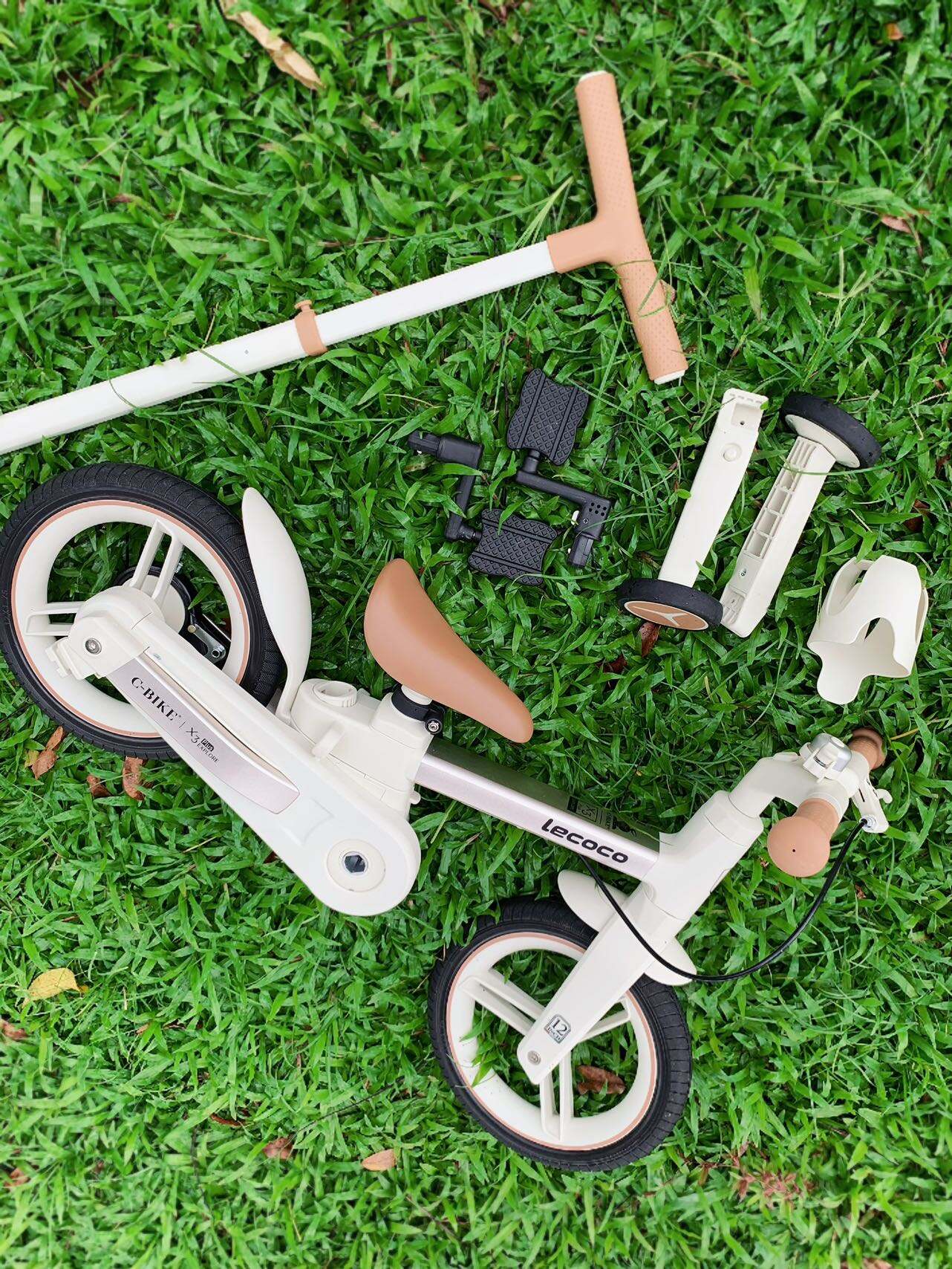
Chemical Safety and Material Compliance Testing
Chemical safety testing constitutes a critical component of convertible bikes compliance, addressing potential exposure to toxic substances through surface contact, mouthing behavior, and material degradation. EN 71-3 migration testing simulates acidic conditions in children's digestive systems to measure the release of heavy metals including antimony, arsenic, barium, cadmium, chromium, lead, mercury, and selenium from accessible materials. Testing requires extraction of material samples in simulated gastric fluid followed by analytical chemistry techniques to quantify migrated elements against strict concentration limits. ASTM F963 incorporates similar requirements for heavy metal content, with particularly stringent limits for lead content in surface coatings and substrate materials accessible to children.
Beyond heavy metals, convertible bikes must meet requirements for phthalates, which are plasticizers commonly used in vinyl and plastic components. The Consumer Product Safety Improvement Act in the United States restricts phthalate content in children's toys and child care articles, with specific prohibitions on DEHP, DBP, and BBP exceeding 0.1% by weight in accessible plastics. Testing laboratories use gas chromatography-mass spectrometry to identify and quantify phthalate compounds in plastic components including grips, seats, and decorative elements. B2B buyers should require comprehensive chemical testing reports covering all accessible materials, as non-compliance with chemical safety requirements can result in market recalls, regulatory penalties, and significant reputational damage regardless of a product's mechanical safety performance.
Documentation and Traceability Requirements
Certification of convertible bikes generates extensive documentation that B2B buyers must collect, verify, and maintain for regulatory compliance and liability protection. The Children's Product Certificate required for U.S. market entry must identify the product, cite applicable CPSC regulations, specify the manufacturer and production dates, provide testing laboratory contact information, and maintain traceability to specific production batches. This certificate must be based on passing test results from CPSC-accepted laboratories and must be issued by the manufacturer or importer as a formal compliance declaration. European market entry requires a Declaration of Conformity signed by the manufacturer stating compliance with applicable directives and standards, supported by a technical file containing design drawings, risk assessments, test reports, and quality system documentation.
Traceability systems connect individual products to their certification documentation through batch coding, serial numbers, or production date marking that allows field tracking back to specific test reports and manufacturing conditions. For convertible bikes with multiple configuration options or accessories, documentation must address each variant and demonstrate that testing covered all intended use modes and combinations. B2B buyers should establish systems for collecting and archiving supplier documentation, including original test reports from accredited laboratories, material safety data sheets for all components, factory quality control records, and evidence of ongoing compliance monitoring. This documentation becomes critical during customs clearance, retail partner due diligence, consumer inquiries, and potential regulatory investigations or product liability claims.
Supplier Quality Assurance and Factory Compliance Verification
Factory Audit Protocols and Certification Schemes
Beyond product-level testing, verifying that convertible bikes manufacturers maintain robust quality management systems requires factory audits and certification to recognized quality standards. ISO 9001 certification provides baseline assurance that manufacturers operate documented quality management systems with established procedures for design control, production monitoring, and corrective action. For children's product manufacturers, ISO 9001 certification should be supplemented by facility-specific social compliance audits such as BSCI, Sedex, or SA8000 that verify ethical labor practices and working conditions, addressing reputational risks that B2B buyers face when sourcing from global manufacturing partners.
Factory audits specifically focused on product safety should evaluate incoming material inspection procedures, in-process quality checkpoints, finished product testing capabilities, and non-conforming product handling systems. Auditors should verify that manufacturers maintain calibrated testing equipment for dimensional verification, strength testing, and functional checks, with documented calibration schedules and calibration certificates from accredited calibration laboratories. Critical quality checkpoints for convertible bikes include verification of transformation mechanism function, assessment of sharp edges and points, confirmation of labeling accuracy and permanence, and validation of assembly integrity for products delivered in knocked-down configurations. B2B buyers conducting or commissioning factory audits should use standardized checklists aligned with target market requirements and should verify that audit findings result in documented corrective actions with objective evidence of implementation.
Production Testing and Batch Quality Control
While third-party certification provides initial product validation, ongoing production quality for convertible bikes requires systematic in-line testing and batch sampling protocols. Manufacturers should implement first article inspection procedures that comprehensively evaluate initial production units from each batch against approved specifications, with documented sign-off before full production continues. In-process testing at defined production stages catches defects early, reducing waste and preventing accumulation of non-conforming products. For convertible bikes, critical in-process checks include weld integrity verification, dimensional conformance of transformation mechanisms, proper torque application on threaded fasteners, and functional testing of adjustment systems.
Statistical sampling plans such as AQL inspection protocols define the quantity and frequency of finished product testing based on lot size and desired confidence levels. For safety-critical characteristics, manufacturers should employ tightened inspection levels with smaller acceptable quality limits, increasing sampling frequency or implementing 100% inspection for high-risk failure modes. Testing equipment on factory floors should replicate methods used in certification testing, allowing direct comparison between production samples and certified samples. B2B buyers should negotiate quality agreements that specify sampling frequencies, acceptable defect rates, testing methods, and consequences for non-conforming shipments, with provisions for third-party pre-shipment inspection when additional verification is warranted.
Change Control and Ongoing Compliance Management
Maintaining compliance for convertible bikes over product lifecycles requires rigorous change control procedures that evaluate safety implications of any design modifications, material substitutions, or process changes. Manufacturers should operate formal engineering change order systems requiring documented review and approval before implementing changes to certified products. Safety-significant changes may trigger requirements for re-testing and updated certification documentation, depending on the nature and extent of modifications. Component substitutions, even when dimensionally equivalent, may introduce different material compositions requiring new chemical testing to verify continued compliance with restricted substances requirements.
Ongoing compliance monitoring includes tracking regulatory updates in target markets, as safety standards and chemical restrictions evolve periodically with new scientific understanding and regulatory priorities. The European Union's Registration, Evaluation, Authorization, and Restriction of Chemicals regulation continuously adds substances to restricted lists, requiring manufacturers to verify supply chain compliance with latest requirements. B2B buyers should establish communication protocols with suppliers ensuring prompt notification of any production changes, regulatory developments affecting products, or field performance issues that might indicate safety concerns. Annual compliance reviews examining current test reports, regulatory status, and documented quality system performance help identify when re-certification, updated testing, or corrective actions are necessary to maintain market compliance.
Practical Considerations for B2B Procurement of Compliant Convertible Bikes
Supplier Evaluation and Due Diligence Criteria
When selecting suppliers for convertible bikes, B2B buyers should implement structured evaluation processes that assess compliance capabilities alongside commercial factors. Supplier questionnaires should request specific information about testing laboratory relationships, existing certifications for target markets, internal quality control capabilities, and previous experience with similar product categories. References from other B2B customers, particularly those serving regulated markets, provide valuable insights into supplier reliability and responsiveness to compliance requirements. Site visits or third-party factory assessments verify that claimed capabilities match operational reality, examining actual production conditions, testing equipment, and quality documentation systems.
Financial stability assessment helps ensure that suppliers can maintain long-term compliance commitments, as ongoing testing, quality system maintenance, and potential corrective actions require sustained investment. Suppliers facing financial distress may reduce quality inputs, skip testing procedures, or fail to maintain certifications, creating compliance risks for B2B buyers. Contractual agreements should specify compliance requirements explicitly, including product standards to be met, required certifications and documentation, testing frequencies, change notification obligations, and warranty provisions addressing non-compliant products. Clear remedies for non-compliance including rejection rights, cost recovery provisions, and termination options protect B2B buyers when suppliers fail to meet safety requirements.
Documentation Requirements and Verification Procedures
B2B buyers should establish standard documentation packages required before accepting shipments of convertible bikes, ensuring complete compliance evidence accompanies products. Essential documents include test reports from accredited laboratories covering all applicable standards, certificates of compliance signed by responsible parties, material declarations listing all components and their compositions, and instruction manuals with required safety warnings and age grading information. For initial orders and after any product modifications, buyers should require complete test report packages showing detailed results for all tested parameters, not merely summary certificates stating compliance.
Verification procedures should include cross-checking test report details against received products, confirming that model numbers, production dates, and physical characteristics match tested samples. Laboratory accreditation status can be verified through official directories maintained by accreditation bodies such as the CPSC for U.S. testing or national accreditation organizations for ISO 17025 laboratory accreditation. When documentation appears inconsistent, incomplete, or potentially fraudulent, B2B buyers should commission independent verification testing through their own laboratory relationships before accepting products for distribution. Some buyers implement random sampling programs where a percentage of incoming shipments undergo independent testing regardless of supplier-provided documentation, providing statistical confidence in ongoing compliance.
Risk Management and Liability Protection Strategies
Despite thorough supplier vetting and documentation collection, B2B buyers of convertible bikes face residual compliance and product liability risks requiring additional protective measures. Product liability insurance covering children's products provides financial protection against claims arising from product defects, with coverage terms reflecting the heightened scrutiny and potential exposure associated with children's safety products. Insurance providers often require evidence of systematic compliance programs, making documented supplier evaluation, testing protocols, and quality agreements both risk management tools and insurance qualification requirements.
Contractual indemnification provisions allocating responsibility for non-compliance between suppliers and buyers should be carefully negotiated with attention to enforceability in relevant jurisdictions. While suppliers should bear primary responsibility for product compliance, practical recourse depends on supplier financial resources and jurisdictional reach, making buyer-level verification and quality control essential regardless of contractual language. Post-market surveillance systems monitoring customer complaints, return patterns, and safety incident reports enable early detection of potential compliance issues or field performance problems. Documented response protocols for addressing identified safety concerns demonstrate responsible product stewardship and support defensibility if regulatory actions or product liability claims arise.
FAQ
What are the most important safety certifications B2B buyers should require for convertible bikes?
B2B buyers should require ASTM F963 compliance with CPSC-accepted laboratory testing for U.S. markets, EN 71 series compliance with CE marking and Declaration of Conformity for European markets, and ISO 8098 compliance for bicycle-specific safety requirements. Additionally, buyers should request chemical safety testing confirming compliance with phthalate restrictions and heavy metal limits, supported by test reports from accredited laboratories rather than supplier-issued certificates alone. Market-specific requirements such as GB 6675 for China or country-specific toy safety regulations for other target markets should be verified through appropriate documentation.
How can B2B buyers verify that convertible bikes suppliers maintain ongoing compliance between certifications?
Buyers should implement periodic factory audits examining quality control procedures, review production testing records demonstrating routine safety verification, and establish change control protocols requiring notification and approval before product modifications. Requesting quarterly compliance updates documenting any regulatory changes, production modifications, or test result summaries provides ongoing visibility. Third-party pre-shipment inspection services can conduct random sampling and testing of production batches, while contractual provisions requiring annual re-certification or updated testing at defined intervals ensure periodic independent verification of continued compliance.
What documentation should B2B buyers maintain to demonstrate due diligence in sourcing compliant convertible bikes?
Essential documentation includes complete test reports from accredited laboratories showing detailed results for all tested parameters, Children's Product Certificates or Declarations of Conformity for each product model, supplier quality agreements specifying compliance requirements, factory audit reports or ISO 9001 certificates demonstrating quality system capabilities, and material safety data sheets for all product components. Additionally, buyers should maintain records of supplier evaluation processes, change control communications, inspection records for received shipments, and any independent verification testing results, creating an audit trail demonstrating systematic compliance management throughout the supply chain relationship.
How do safety requirements differ for convertible bikes in balance mode versus pedal bicycle configuration?
Balance mode configuration typically emphasizes stability testing at various angles, ground clearance requirements appropriate for foot propulsion, and handlebar height ranges suitable for standing-stride operation. Pedal bicycle configuration introduces additional requirements for braking system performance including minimum deceleration rates and maximum hand force specifications, chain guard requirements to prevent entanglement hazards, and pedal design specifications including minimum surface area and slip resistance. Transformation mechanisms connecting the two modes require testing for secure locking in both configurations, resistance to unintended conversion during use, and durability through repeated transformation cycles. Comprehensive testing must evaluate safety in both operational modes and during transition between configurations to ensure convertible bikes meet applicable standards across their full functional range.
Table of Contents
- Understanding the Global Safety Framework for Convertible Bikes
- Testing Protocols and Certification Processes for Convertible Bikes
- Supplier Quality Assurance and Factory Compliance Verification
- Practical Considerations for B2B Procurement of Compliant Convertible Bikes
-
FAQ
- What are the most important safety certifications B2B buyers should require for convertible bikes?
- How can B2B buyers verify that convertible bikes suppliers maintain ongoing compliance between certifications?
- What documentation should B2B buyers maintain to demonstrate due diligence in sourcing compliant convertible bikes?
- How do safety requirements differ for convertible bikes in balance mode versus pedal bicycle configuration?