
 EN
EN



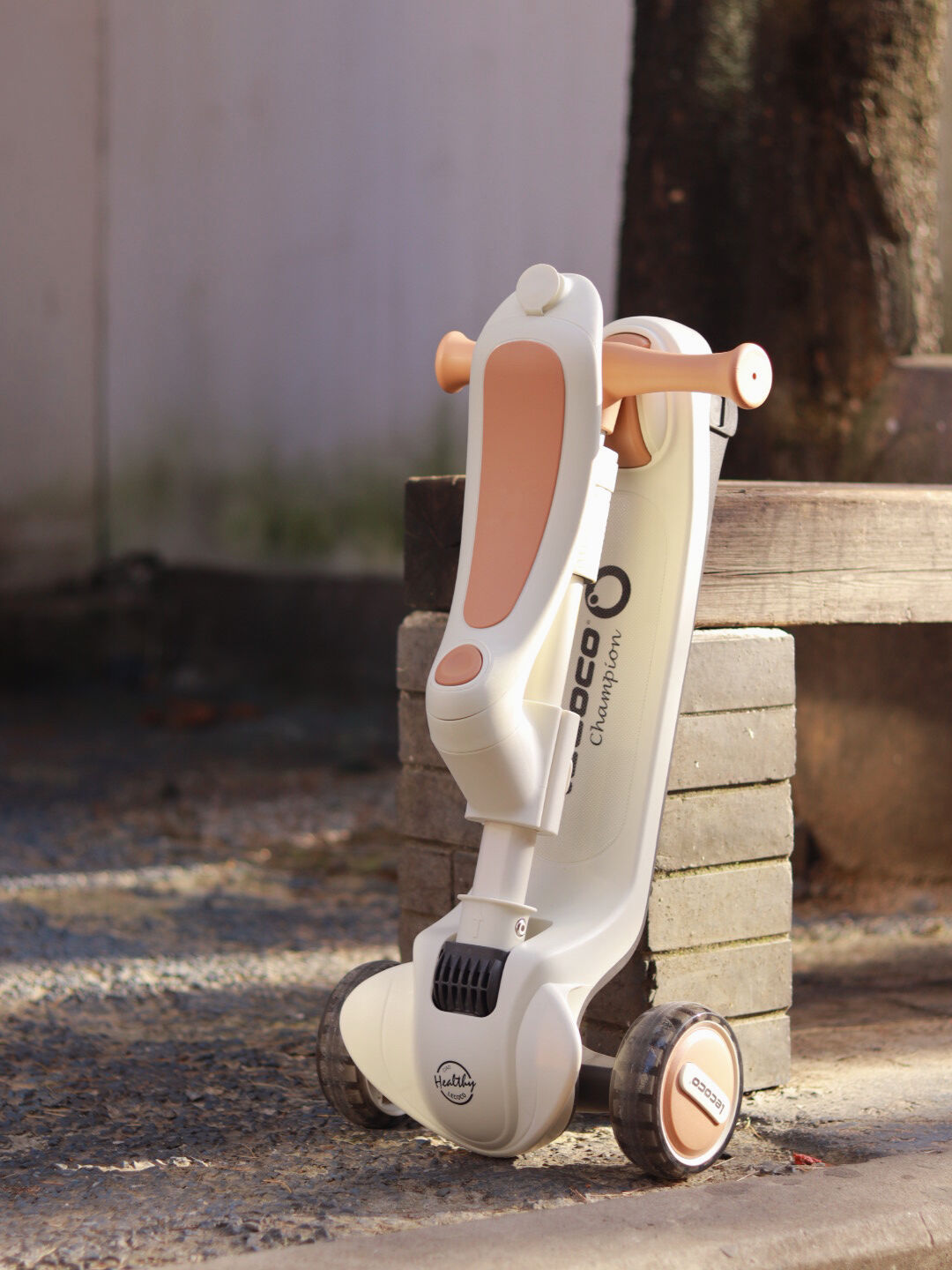
Every parent who has watched a toddler wobble on their first ride knows that a child's relationship with their scooter evolves dramatically over just a few years. The question of how a kids growth scooter can genuinely adapt to changing skill levels is not just a matter of convenience — it is a design and engineering challenge that directly affects a child's safety, confidence, and enjoyment at every developmental stage. Understanding what makes a scooter truly adaptable helps families make smarter investments and gives kids the right tool for each phase of their physical and cognitive development.
A well-designed kids growth scooter is not simply a small vehicle that a child outgrows in a season. It is a platform that shifts alongside the rider, accommodating everything from a beginner's cautious first pushes to the faster, more confident gliding of an older, skilled child. This article explores the specific mechanisms, design features, and developmental principles that allow a modern kids growth scooter to remain relevant, safe, and engaging as children progress from early walkers to capable riders.
The Developmental Stages That a Kids Growth Scooter Must Address
Early Beginners: Building Balance and Coordination
The earliest stage of scooter use typically begins around age two or three, when children are still refining their gross motor skills and basic balance. At this stage, a kids growth scooter should prioritize stability above all else. Wide wheelbases, low deck heights, and three-wheel configurations are common features that prevent tip-overs and give young riders a stable platform to experiment on. The goal is not speed — it is confidence, and confidence comes from feeling in control.
Beginners at this stage also benefit from intuitive steering mechanisms. Lean-to-steer technology, for example, allows a child to direct the scooter simply by shifting their body weight rather than aggressively turning handlebars. This mirrors natural instincts and reduces the cognitive load of learning to ride. A kids growth scooter that incorporates lean-to-steer from the beginning helps young riders develop the proprioceptive awareness they will carry into all future physical activities.
Handlebar height at this stage is equally critical. Handlebars that are too high force a child to reach awkwardly, throwing off their balance. Handlebars that are too low cause a hunched posture that limits control. An adjustable handlebar system, which a quality kids growth scooter will always include, allows parents to fine-tune the fit as the child grows, ensuring ergonomic alignment at every age.
Intermediate Riders: Developing Speed, Agility, and Spatial Awareness
Around ages four to six, most children transition into a more active and explorative style of riding. They begin pushing harder, riding faster, and testing their ability to navigate turns and slopes. This is the stage where a kids growth scooter must evolve from a stability-first device into a more dynamic, responsive ride. Some designs accomplish this by allowing parents to remove one of three wheels, converting the scooter from a three-wheel layout to a two-wheel layout to match the child's improved balance.
At the intermediate stage, deck size becomes relevant. A child who is physically larger needs more foot space to maintain comfort and balance during longer rides. A kids growth scooter with an extendable or appropriately sized deck ensures the rider can adopt a natural, stable stance without feeling cramped. Cramped stances often lead to compensatory postures that increase the risk of falls.
Wheel quality also begins to matter more at this stage. Intermediate riders generate more momentum, so wheels need to provide a smooth, consistent roll over varied surfaces such as pavements, park paths, and slightly uneven terrain. High-quality polyurethane wheels with adequate diameter absorb minor vibrations and maintain directional stability, which is a key feature in a well-engineered kids growth scooter aimed at this age group.
Structural Adaptability: The Engineering Behind a True Kids Growth Scooter
Adjustable Components That Evolve With the Child
The most immediately recognizable feature of an adaptive kids growth scooter is its adjustable handlebar system. Unlike fixed-height handlebars, which force a child to either stretch or stoop, an adjustable column allows the ride height to be fine-tuned in increments over several years. This means the same scooter can serve a three-year-old and a seven-year-old comfortably, provided the adjustment range is broad enough to accommodate the growth between those ages.
Beyond handlebars, some advanced kids growth scooter designs also allow modification of the steering sensitivity. Young children benefit from a softer, more forgiving steering response, while older children prefer a more direct and precise connection between their lean and the scooter's direction. Adjustable steering tension — though less common — represents one of the more sophisticated expressions of a true growth-adaptive scooter design.
Weight capacity is another structural factor that determines how long a kids growth scooter can genuinely serve a growing child. A scooter rated for only 20 kilograms will become unsafe well before a child reaches school age in many cases. Higher-quality models use reinforced frames and durable materials to support a broader weight range, reflecting a more honest commitment to long-term adaptability.
Wheel Configuration Changes and Their Impact on Skill Development
One of the most impactful adaptability features in a modern kids growth scooter is the ability to change wheel configuration. A three-wheel setup provides the extra stability that true beginners need, distributing the rider's weight across a wider base. As a child gains confidence and balance, switching to a two-wheel configuration introduces a new physical challenge that accelerates skill development without requiring the child to transition to an entirely new product.
This transition is psychologically significant as well as physically important. When a child makes the switch from three wheels to two on the same kids growth scooter they already know and trust, the learning curve feels far less intimidating. Familiar handlebars, a known deck feel, and a comfortable overall size all reduce anxiety and support faster skill acquisition. This is a nuance that is often overlooked when comparing adaptive scooter designs.
The reverse is also true: when a child is struggling or recovering from a confidence setback, a parent can temporarily revert to the three-wheel configuration without the child feeling like they have failed or regressed. This flexibility makes the kids growth scooter a more supportive and emotionally sensitive tool in a child's physical development journey.
Safety Features That Must Scale With Growing Skill Levels
Braking Systems Appropriate for Each Stage
For young beginners, braking systems need to be intuitive and require minimal strength to activate. Rear fender brakes — where the child presses down on a flap over the rear wheel with their foot — are the most common solution and are well-suited to early-stage riders. The action is simple, instinctive, and requires no hand strength. A quality kids growth scooter will include this type of brake as the standard stopping mechanism for younger users.
As children grow and begin riding faster, the effectiveness of the braking system under real-world conditions becomes more important. The rear fender brake should be robust enough to provide meaningful deceleration even at higher speeds, while remaining smooth enough not to cause abrupt stops that could throw a child forward. Materials matter here — a fender brake made from durable, high-friction material will perform consistently across weather conditions and over time.
Some advanced kids growth scooter designs are beginning to incorporate hand brakes as an optional feature for older, more skilled riders. This parallels the natural progression seen in bicycle development, where riders graduate from coaster brakes to hand levers as their coordination and strength increase. Providing this option within the same platform is another sign of genuine adaptability in the product's design philosophy.
Deck Design and Non-Slip Surfaces for Rider Safety
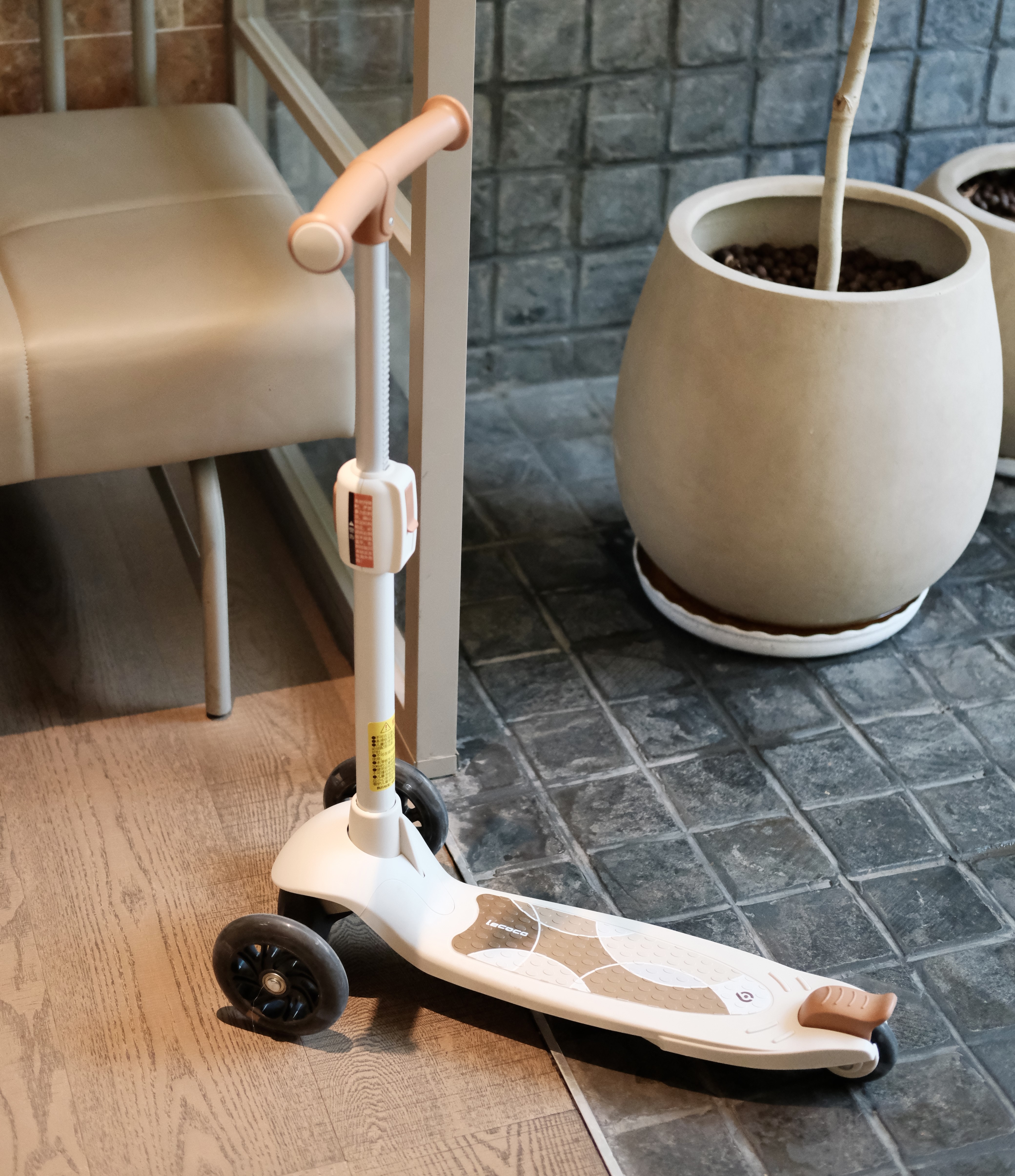
The deck is the interface between the rider and the scooter, and its design has direct safety implications at every skill level. For beginners, a wider, lower deck provides more surface area for foot placement and reduces the likelihood of a misplaced step leading to a fall. For more advanced riders, a slightly narrower and longer deck allows for a more dynamic riding stance and better energy transfer during pushes.
Non-slip surfaces on the deck are non-negotiable in a well-designed kids growth scooter. Whether accomplished through textured grip tape, rubberized surfacing, or molded anti-slip patterns, the deck must maintain traction in wet, dry, and slightly dusty conditions. As children ride faster and with more body movement, the risk of a foot sliding off the deck increases, making surface grip an active safety feature rather than a cosmetic detail.
Deck height from the ground is also a quiet but important safety variable. A lower deck requires less effort to mount and dismount, which matters enormously for toddlers with limited leg strength. As a child grows, a slightly higher deck position may actually improve riding mechanics by allowing a more powerful push stride. A kids growth scooter that thoughtfully addresses deck height as part of its adaptable design demonstrates a deeper understanding of developmental biomechanics.
Choosing the Right Kids Growth Scooter for Your Child's Journey
Evaluating Adaptability Claims Before Purchase
Not every scooter marketed as 'multi-stage' or 'growth-adaptive' genuinely delivers on that promise. When evaluating a kids growth scooter, parents should look beyond marketing language and examine the specific adjustment ranges documented by the manufacturer. What is the minimum and maximum handlebar height? Over how many distinct positions can it be set? What is the maximum rider weight the frame is tested and certified to support? These numbers tell a far more honest story than broad promotional claims.
The ease of making adjustments also matters in the real world. A kids growth scooter that requires specialized tools or an engineering background to reconfigure will not actually be adjusted regularly, which defeats the purpose of the adaptive design. Quick-release mechanisms and tool-free adjustment systems are practical features that encourage parents to keep the scooter properly fitted as their child grows month by month.
Material quality is an underappreciated factor when assessing value in a kids growth scooter. A scooter intended to serve a child for four or five years must be built from materials that can withstand years of daily use, outdoor exposure, and the occasional collision or drop. Aircraft-grade aluminum frames, reinforced joints, and UV-resistant components are indicators of a design that was built for longevity as well as adaptability.
Matching the Scooter's Features to Your Child's Current Stage
Even the most adaptable kids growth scooter requires parents to actively engage with the configuration process. Simply purchasing the right product is not enough — the scooter must be set up to match the child's current size and skill level, then reassessed periodically as the child develops. A monthly check of handlebar height against the child's waist measurement is a simple habit that keeps the riding experience comfortable and safe.
Observing how a child rides is equally informative. If a child consistently looks uncomfortable, struggles to maintain balance, or seems frustrated by the scooter's response, these are signals that an adjustment or configuration change is needed. A kids growth scooter should feel natural and empowering at every stage, not like a battle against an ill-fitting piece of equipment.
Ultimately, the right kids growth scooter is one that stays slightly ahead of the child's current abilities without overwhelming them. It should always offer a gentle challenge that encourages progression — a balance that well-designed adaptive scooters achieve through thoughtful engineering and a genuine understanding of child development.
FAQ
At what age can a child start using a kids growth scooter?
Most adaptive kids growth scooter models are designed to accommodate children from around age two, when basic standing balance has been established. The three-wheel configuration available in multi-stage designs provides the additional stability that very young children need during their first riding experiences. Always check the manufacturer's minimum age and weight recommendations for the specific model you are considering.
How do I know when to switch my child from three wheels to two wheels?
The right time to transition a child to a two-wheel configuration on their kids growth scooter is when they consistently ride with confidence, rarely need to compensate for tipping, and begin showing frustration with the limitations of the more stable setup. Most children reach this milestone between ages four and six, though every child develops at their own pace. There is no rush — keeping a child in the three-wheel stage a little longer is always safer than pushing them forward prematurely.
How often should I adjust the handlebar height on a kids growth scooter?
A practical guideline is to check the handlebar height every one to two months during the rapid growth phases of early childhood. The handlebars should ideally sit at or just below the child's waist height when they are standing on the deck. On a well-designed kids growth scooter, this adjustment should take less than a minute with no tools required, making it easy to stay on top of as your child grows.
Is a kids growth scooter worth the investment compared to buying multiple scooters?
For most families, a quality kids growth scooter represents better long-term value than purchasing two or three separate scooters at different developmental stages. Beyond the financial comparison, the continuity of using a familiar scooter as their skills evolve offers children a psychological comfort and confidence that contributes positively to their learning journey. The key is choosing a model with a genuinely broad adjustment range, robust construction, and proven durability across multiple years of use.